

When most people buy a home in Coquitlam, Port Moody, Port Coquitlam, or elsewhere in Greater Vancouver, they look at the things you would expect: location, price, schools, transit, condition, and future resale value.
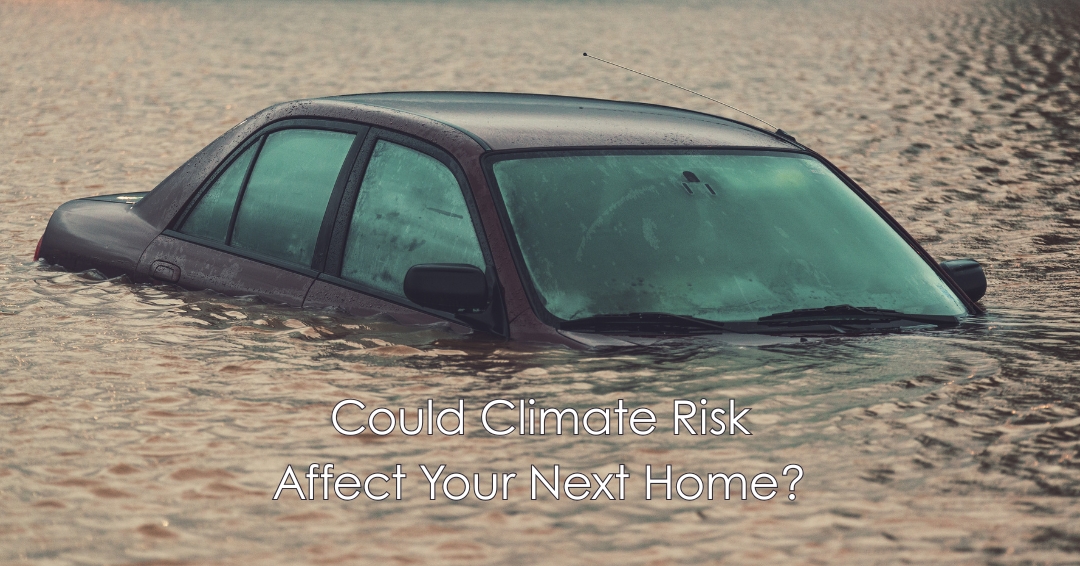
There is another factor I think buyers should increasingly consider: how the property could be affected by a changing climate.
That doesn't mean I think buyers should be afraid of purchasing property in Greater Vancouver. Far from it. It means that two homes in the same city can have very different exposure to flooding, heavy rainfall, wildfire, extreme heat, drainage issues, or other environmental risks.
Climate risk is becoming another part of good real estate due diligence. And, like most things in real estate, the specific property matters far more than the headline.
What Does Climate Change Mean for Real Estate in Coquitlam?
The City of Coquitlam is already planning for changing conditions. Its climate projections include higher average temperatures, drier summers, rising sea levels, and an increase in major storm and rainfall events. The City currently projects total storm/rain events increasing by approximately 17%.
Coquitlam has also adopted both a Climate Adaptation Strategic Plan and, in January 2026, a new Climate Action Plan aimed at creating a more resilient city.
For somebody buying a home, however, citywide projections are only the beginning. Here are some of the things I would look at.
1. Flood Risk and Heavy Rainfall
In our part of B.C., flooding doesn't necessarily mean living directly beside a major river.
Heavy rain can affect:
low-lying properties
homes near creeks and watercourses
properties with poor lot drainage
homes at the bottom of slopes
basements with a history of water penetration
neighbourhoods dependent on dikes and pumping infrastructure
strata buildings with underground parkades
This is particularly important because the Tri-Cities contain rivers, creeks, steep terrain, and significant elevation changes within a relatively small geographic area.
Flood Risk in Coquitlam
Coquitlam maintains floodplain mapping for the Coquitlam, Fraser, and Pitt Rivers. The City also has dikes around certain low-lying areas, together with pump stations used to move water when river levels are high. Importantly, Coquitlam states that its floodplain mapping takes projected sea-level rise into account.
That doesn't mean every property within or near one of these areas is a bad purchase. It means you should understand the property's location and the infrastructure protecting it before buying.
Flood Risk in Port Coquitlam
Flooding deserves particular attention in portions of Port Coquitlam because of the city's rivers, creeks, and low-lying areas.
Following the major October 2024 storm, Port Coquitlam identified impacts in areas including Lombardy Drive, Lincoln Avenue, Richmond Place, and Patricia Avenue, and subsequently made drainage and flood-protection improvements.
As recently as March 2026, the City was again monitoring high streamflows and the possibility of localized flooding from heavy rainfall. Again, I wouldn't automatically rule out a neighbourhood because flooding has occurred somewhere nearby. I would investigate the individual property.
Flood Risk in Port Moody
Port Moody has a different issue because it is a coastal community. The City specifically identifies sea-level rise and coastal flooding as climate risks and is developing a Coastal Flood Management Strategy that will include flood mapping, risk assessment, and adaptation planning. Port Moody also has approximately 80 kilometres of streams, so intense rainfall can create creek flooding and debris-flow concerns in addition to coastal flooding.
2. Look Beyond the Flood Map
One mistake would be to check a flood map and stop there. When I am helping a buyer assess a property where water could be a concern, I would also want to know things such as:
How is the lot graded? Does water naturally run away from the house or toward it?
Where does water go during a major storm? Look at the driveway, retaining walls, neighbouring properties, catch basins, creeks, and slopes.
Has the basement ever leaked?
Has a perimeter drainage system been replaced?
Is there a sump pump or backwater valve?
Have there been previous insurance claims?
If it is a strata, has the building experienced water ingress or flooding in its underground parkade?
A home can be outside an obvious floodplain and still have water problems. Conversely, a property in an area where flood management is required may have substantial infrastructure protecting it. This is why I prefer looking at the specific property rather than making decisions based solely on a neighbourhood name.
3. Wildfire Risk in Coquitlam and the Tri-Cities
Wildfire is another consideration, particularly where residential neighbourhoods meet heavily forested areas. This is known as the wildland-urban interface.
Coquitlam specifically provides guidance for properties in wildland-urban interface areas and recommends measures including non-combustible roofing and building materials, removal of dry vegetation, and management of trees and landscaping around homes.
The City also has a Community Wildfire Resiliency Plan that includes fuel management in higher-risk areas, FireSmart education, and coordination with the BC Wildfire Service and neighbouring jurisdictions
If I were assessing one of these properties for a buyer, I would look at:
proximity to forested land
vegetation immediately surrounding the house
roof and siding materials
gutters and roof maintenance
access for emergency vehicles
the condition and location of neighbouring vegetation
insurance availability and cost
A beautiful greenbelt location can be one of the reasons somebody loves a property. It simply deserves another level of due diligence.
4. Extreme Heat Is Becoming a Housing Issue
This one receives much less attention from buyers than flooding or wildfire but I think it will become increasingly important. Coquitlam projects both higher average temperatures and more frequent and prolonged heat waves.
The question becomes: How comfortable is this particular home during a prolonged summer heat event? This is particularly worth considering with condos. A west-facing condo with large windows and no air conditioning can behave very differently from a north- or east-facing suite in the same building.
Some things worth looking at include:
air conditioning or a heat pump
window orientation
exterior shading
quality of windows
ventilation
insulation
tree canopy
whether a strata permits heat-pump installation
electrical capacity for future upgrades
Coquitlam now specifically provides homeowners and condo residents with information on cooling living spaces and improving energy efficiency during hot weather. For buyers comparing two otherwise similar properties, those features may become increasingly meaningful.
5. Insurance Should Be Investigated Before You Buy
This may ultimately be one of the biggest real estate implications of climate risk. Canada has already experienced a dramatic increase in insured losses from severe weather. According to the Insurance Bureau of Canada, insured catastrophic weather losses exceeded $8.5 billion in 2024, making it the costliest year on record. In 2025, losses exceeded another $2.4 billion. I wouldn't assume that every property will have the same insurance options or premiums. The Province of B.C. itself recommends understanding the natural hazards affecting an area and discussing the appropriate coverage with an insurer.
Before removing subjects on a purchase, I would want a buyer to confirm insurance.
Ask your insurer these questions:
Is overland flood coverage available?
Is sewer-backup coverage included?
Are there wildfire restrictions or exclusions?
What is the deductible?
Does the property's location materially affect the premium?
Have there been previous claims associated with the property?
Are there special conditions because of the roof, electrical system, plumbing, oil tank, or other building components?
For strata properties, I would also review the strata corporation's insurance and claims history.
6. Slope and Landslide Considerations
Greater Vancouver isn't flat. Some of Greater Vancouver's best homes and views are on hillsides. Coquitlam, Port Moody, Burnaby, the North Shore, and other municipalities contain substantial hillside development. Heavy rain can make slope stability and drainage more relevant, particularly where a property sits above or below a steep slope.
Depending on the property, I may want to investigate:
retaining walls
signs of soil movement
drainage
geotechnical reports
previous permits
creek or ravine setbacks
neighbouring slopes
municipal development restrictions
This is an area where a home inspection alone may not always provide the whole answer. Depending on what we find, advice from an engineer or geotechnical professional may be appropriate.
7. Energy Efficiency Is More Than Being "Green"
The conversation around energy-efficient homes is sometimes presented entirely as an environmental issue. As a buyer, I look at it more practically. A more efficient house may simply be less expensive and more comfortable to live in.
Features worth considering include:
heat pumps
high-efficiency heating
improved insulation
modern windows
air sealing
efficient hot-water systems
exterior shading
EV charging
newer roofing and building-envelope systems
Port Moody's Climate Ready Homes and Buildings Plan specifically considers both energy efficiency and the ability of buildings to deal with heat, poor air quality, flooding, and windstorms. Coquitlam is also encouraging energy-efficiency improvements as part of its climate planning.
For me it's whether it will be comfortable, durable, insurable and economical to own over the long term.
8. Climate Risk Can Be Different From One Street to the Next
This is probably the most important point in the post. Consider the geography just within the Tri-Cities. One property may be near the river. Another may back onto forest. Another may sit below a steep slope. Another may be a west-facing high-rise condo. Another may be an older home with poor drainage. And another property a few streets away may have very little exposure to any of those issues. That's why I wouldn't create a list of "safe" and "unsafe" neighbourhoods. I would assess the home, the lot, the building, and the location.
My Climate-Risk Checklist When Buying Real Estate
If climate or environmental risk is important to you, these are some of the items I would consider before purchasing:
Check municipal floodplain and hazard information.
Look at nearby rivers, creeks, ravines, forest, and slopes.
Examine the property's grading and drainage.
Review the Property Disclosure Statement and ask about previous water or weather-related damage.
Review strata minutes, engineering reports, depreciation reports, and insurance claims where applicable.
Get an insurance quote before removing subjects.
Consider wildfire exposure and FireSmart characteristics.
Check cooling, ventilation, window exposure, and heat-pump options.
Review retaining walls and slope conditions where relevant.
Bring in the appropriate professionals if something warrants further investigation.
Not every one of these will apply to every property. The point is knowing which questions need to be asked for the particular home you are buying.
Buying Real Estate in Coquitlam With Climate Change in Mind
I have been selling real estate in Coquitlam and Greater Vancouver since 2004, and the due-diligence process continues to evolve. Climate considerations are increasingly part of that process.
I don't believe buyers need to panic about climate change or try to find a property with absolutely no risk. No property is completely risk-free. If however, flooding, wildfire, insurance, extreme heat, drainage or other climate-related concerns are important to you, they should be investigated before you buy, not after.
There can be a big difference between identifying a potential issue and understanding whether it actually represents a significant risk to a particular property.
If you're considering buying a home in Coquitlam, Port Moody, Port Coquitlam, or elsewhere in Greater Vancouver and climate risk is one of your concerns, give me a call. I can help you identify the questions to ask, research the property and area, review the available information, and bring in the appropriate professionals when necessary so you can make an informed decision.

 The data relating to real estate on this website comes in part from the MLS® Reciprocity program of either the Greater Vancouver REALTORS® (GVR), the Fraser Valley Real Estate Board (FVREB) or the Chilliwack and District Real Estate Board (CADREB). Real estate listings held by participating real estate firms are marked with the MLS® logo and detailed information about the listing includes the name of the listing agent. This representation is based in whole or part on data generated by either the GVR, the FVREB or the CADREB which assumes no responsibility for its accuracy. The materials contained on this page may not be reproduced without the express written consent of either the GVR, the FVREB or the CADREB.
Comments:
Post Your Comment: